

Do you often feel anxious and worried when faced with challenging situations? It’s completely normal to feel overwhelmed and stressed when facing difficult life situations. Whether it’s a job interview, a big presentation, or a family dispute, anxiety can affect your performance.
But there are simple steps you can take to stay calm and composed in these situations. When you are able to manage your anxiety, you can deal with challenges better.
Today, you will learn 5 practical tips to reduce anxiety in high-stress situations. If you struggle with anxiety in your daily life, try incorporating these tips into your routine to help you stay mindful and relaxed.
You may also like: Building a Healthy Morning Routine: Why It Matters
Why Do We Feel Anxious?

Do you ever feel worried or nervous in stressful situations? This feeling is called anxiety, and it is a normal response when you face challenging situations. It’s your body’s way of preparing you to handle danger or difficulty.
Anxiety often starts when you’re facing a big life change, such as speaking in public for the first time or taking an exam. It can also happen when you’re dealing with ongoing stress, like a demanding job or family issues.
In these situations, your body releases hormones that cause various physical symptoms, such as an increased heart rate and rapid breathing. These symptoms can be uncomfortable, but they are not harmful and will pass once the stressful situation is over. So it’s completely normal to notice these reactions when you’re under pressure.
But what happens when this natural response becomes too much and starts to affect your daily life? That’s why it’s important to find ways to stay calm during anxious moments.
Benefits of Staying Calm in Anxious Situations
Staying calm during anxious situations has many benefits. Some include:
- Clear thinking: When you are calm, it is easier to make good decisions without being rushed or overwhelmed.
- Better health: Staying calm can help lower your heart rate and blood pressure, which supports your overall health.
- Better relationships: When you are calm, you respond more kindly to others, even during disagreements.
- Greater confidence: Learning to manage anxiety builds confidence and resilience, making you feel more in control.
- Improved focus: A calm mind makes it easier to concentrate on tasks and get them done more effectively.
- Enhanced coping skills: Staying calm during anxiety helps you deal with various challenges, big or small.
- Sounder sleep: Staying calm during the day often leads to getting a better night’s sleep.
Related Reading: How to Manage Daily Stress for Better Sleep Naturally
Simple Ways to Stay Calm in Anxious Situations
Now that you know why anxiety happens and why it’s important to stay calm. Let’s look at some practical and easy ways to stay calm in anxious situations.
These techniques are skills you can develop over time. Start with small, steady steps, and you’ll gradually become better at managing anxiety.
1. Focus on Your Breathing

The easiest and most effective way to feel calm is to focus on your breathing. When you are anxious, your breathing sometimes becomes rapid and sometimes slow. Yes often, people don’t even notice these changes in their breathing.
These breathing shifts often happen automatically when we’re anxious. But by consciously focusing on our breathing, we can regulate it, bringing a sense of calm to our body and mind. You can use this simple and accessible technique anywhere, at any time.
Here’s a simple breathing exercise to help you stay calm during anxious moments:
- Start by finding a quiet place where you can either sit up straight or lie down comfortably.
- Next, gently place one hand on your stomach to feel the sensation of breathing. You can also place your other hand on your chest if you want.
- Try taking a deep breath through your nose while counting slowly to 4 in your mind.
- Hold your breath for a moment and then slowly exhale through your mouth while counting to 4 again.
- As you continue this breathing pattern, notice the sensations in your abdomen as they go up and down.
Whenever you feel anxious or overwhelmed, take a few moments to practice this deep breathing technique. You can do it at any time, whether you’re sitting in your office or standing in line at the grocery store.
2. Take a Quick Break
This tip is especially useful for people who experience anxiety in social situations or have a busy lifestyle. When you feel overwhelmed or anxious, take a quick break to step away from the situation and calm your mind. This might mean:
- Finding a quiet corner to sit for a few moments
- Listening to calming music or your favorite podcast for a few minutes
- Step outside for a short walk to enjoy some fresh air and clear your mind
- Drink a glass of water or eat your favorite healthy snack to refresh your mind and body.
- Splashing cold water on your face can also be a simple and refreshing way to shift your focus.
Taking a quick break to calm your mind can help you regain control of your thoughts. The goal is to create a short break in your day to refocus and recharge. When you return, you’ll often feel clearer and better able to handle the situation.
Remember, short breaks don’t solve every problem, but they often make challenges feel more manageable. If you find it hard to step away at first, start small. For example, you could set a timer for five minutes and use that time to walk outside or sit quietly with your eyes closed.
3. Practice Mindfulness or Meditation
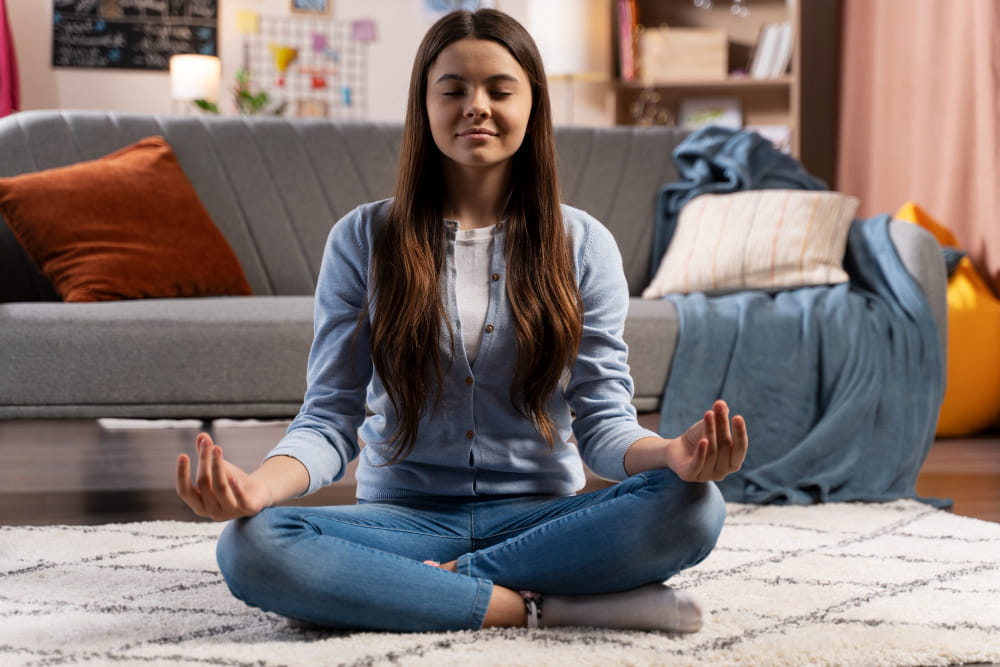
Another highly effective way to stay calm in anxious situations is to practice mindfulness or meditation. When you are feeling anxious, your thoughts often start to spin out of control, which increases stress and worry.
But by practicing mindfulness, you can bring your focus back again to the present moment and calm down those anxious thoughts. This can be especially helpful in tense or overwhelming situations. You don’t need to be a mindfulness expert to benefit from this practice.
Simple techniques like:
- Paying attention to sounds or sensations around you
- Doing a short body scan to relax your muscles
- Practicing guided meditation with a simple audio or app
- Taking a mindful walk and noticing each step
- Pausing to notice a color, object, or scent around you
- Bringing awareness to how your body feels when sitting or standing
- Focusing on a feeling of gratitude for a small moment
- Speaking kindly to yourself to soothe anxious thoughts
The great thing about these techniques is that they don’t take much time. Even just spending minutes practicing mindfulness can make a big difference in calming your mind and reducing stress. So with regular practice, it becomes easier to stay grounded and steady during anxious moments.
4. Challenge Negative Thoughts
Do you know that it’s very common for anxious feelings to come with a stream of negative thoughts? Yes, these thoughts can make the anxiety even worse and can spiral you into a panic state. When you find yourself stuck in this cycle, it’s helpful to take a step back and question these negative thoughts.
The good news is, you can challenge these thoughts with a few simple strategies. Our minds exaggerate fears or assume the worst will happen, but often these thoughts are irrational.
Ask yourself: “Is this idea actually true? Is there any real evidence to support it, or is my mind just going to the worst-case scenario?” Soon you will find that the problem is not as big as it first appeared. Remind yourself that you have the power to question these thoughts.
When You Need Extra Help?
Although the steps above can be very helpful, sometimes anxiety or stress can make it difficult to carry out your daily activities. If this happens, it’s a wise idea to seek out extra help.
Talking to a mental health professional can help you find support and strategies tailored to your needs. Don’t forget you can also be supported by friends, family, and colleagues who care about your wellness journey.
Final Words
Anxious situations are inevitable in life. But with the right strategy and mindset, you can learn to stay calm and manage your anxiety effectively. Whether you focus on your breathing, use positive self-talk, or practice mindfulness, many techniques can help you find your calm.
And don’t forget that self-care and seeking support from loved ones are also critical components of managing anxiety. So, take a deep breath and will see that you are capable of overcoming any worrisome situation that comes your way.
Frequently Asked Questions
What should I do if my anxiety feels out of control?
If anxiety is stopping you from living your life or is hard to manage, reach out for support. You’re not alone, and getting help is a smart and positive step.
Are there any quick tips I can use at work or school?
Yes. Try grounding exercises, like noticing five things you can see or feel around you. Another helpful tip is to take a short break and step outside for a few minutes, if possible.
Is it normal to feel a bit anxious sometimes?
Feeling anxious from time to time is a normal and natural part of human life, especially when you’re dealing with new or challenging situations. Occasional anxiety helps alert you to potential problems and motivates you to prepare or take action. What is most important is to find healthy ways to manage your anxiety and not let it affect your life.
Are there foods or drinks that can help reduce anxiety?
Yes, staying hydrated and eating balanced meals can support your overall mood. Foods rich in magnesium, such as nuts and leafy greens, or snacks like yogurt or fruit, can also help your body cope with stress.

Mia Collins shares easy, practical ways to help you enjoy a happier, healthier life. She’s passionate about health and wellness and loves turning big ideas into simple steps you can use every day.
Mia Collins believes that true health and wellness are achievable for everyone, regardless of their age or current lifestyle. That’s why she strives to provide accessible and practical advice that anyone can incorporate into their daily routine.