

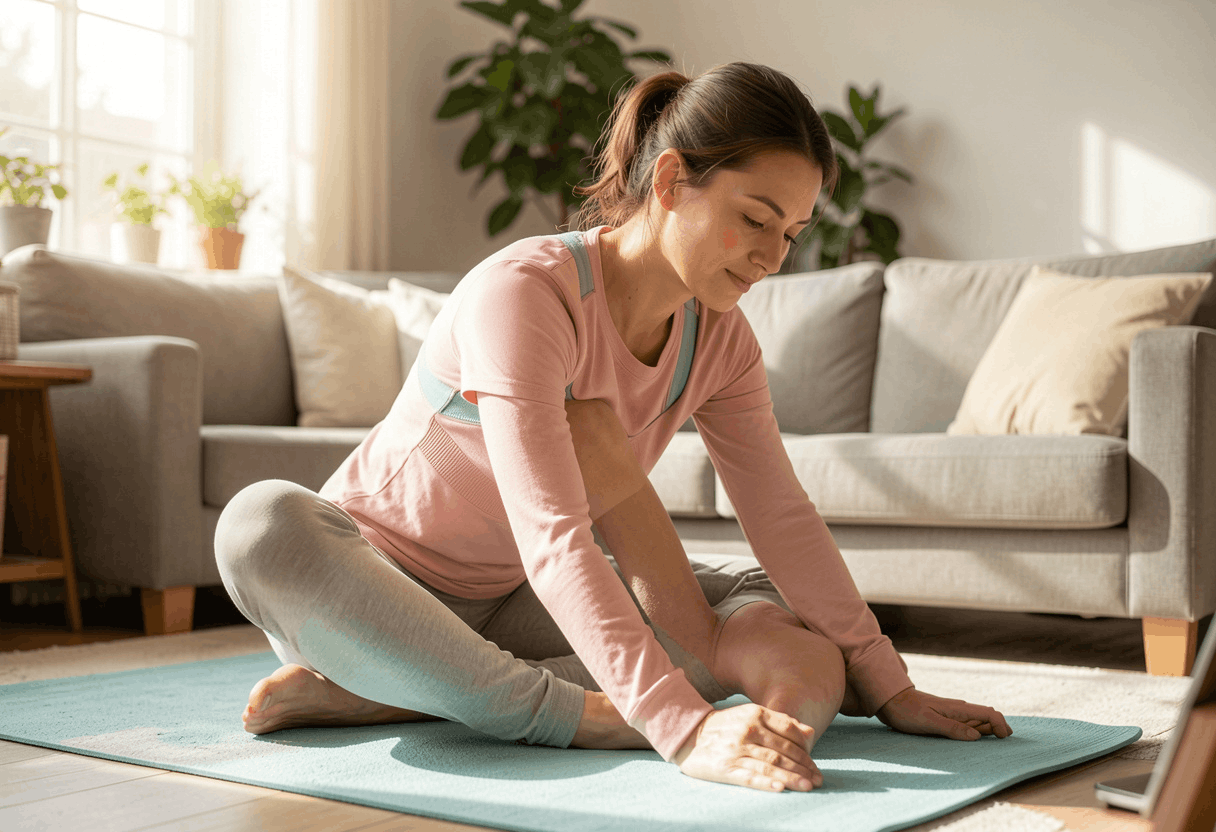
Have you ever felt a little stiffness in your joints during your daily activities? Do you have trouble touching your fingers or reaching for items on high shelves? If so, you may benefit from improving your flexibility. Yes, even as a beginner, you can improve your flexibility in the comfort of your own home.
Many people believe that flexibility is an innate trait you’re either born with or not. But scientific evidence and countless testimonials show that flexibility can be significantly improved with consistent practice and patience.
In this article, I will discuss simple and effective ways to improve your flexibility at home as a beginner. You don’t need any fancy equipment or expensive gym memberships, but what you need is dedication and determination.
You may also like: How to Prevent Workout Injuries
What Does Flexibility Mean?
Flexibility means your muscles and joints can move through a comfortable range of motion. For example, if you can bend forward, reach your arms overhead, turn your neck, or squat down without too much tightness, your body has better flexibility in those areas.
However, flexibility is not the same for everyone. Your age, daily routine, body structure, activity level, past injuries, and even stress can affect how flexible you feel. Because of this, you should not compare your progress to another person’s. Your main focus should be your own body, your own comfort, and your own improvement.
Flexibility also works closely with mobility. Flexibility is your muscles’ ability to lengthen and stretch. Mobility is about how well your joints can move with control. When both improve, daily movements often feel easier. For example, walking, climbing stairs, sitting on the floor, tying your shoes, picking something up, or doing light exercise may feel smoother.
Most importantly, flexibility should not feel painful. A gentle pulling feeling is normal during a stretch. Sharp pain, numbness, tingling, dizziness, or strong discomfort is a sign to stop and adjust.
Why Flexibility Is Important for Beginners
Flexibility is important because it helps your body move with less restriction. Tight muscles can make even simple tasks feel difficult. Over time, stiffness may also affect your posture, balance, and exercise form.
For beginners, flexibility training can be helpful in several ways. First, it may reduce common tightness caused by sitting, standing, driving, studying, or using a phone or computer for long hours. Second, it can help your body feel more relaxed after a busy day. Third, it can support better movement during beginner workouts such as walking, yoga, light strength training, or home exercise.
In addition, stretching teaches you to pay attention to your body. When you stretch regularly, you start noticing which areas feel tight, which movements feel easy, and which positions need more care. This awareness is useful because it helps you move more safely instead of forcing your body too quickly.
Still, it’s important to have realistic expectations about what stretching can do for you. Stretching is not a quick cure for every ache or health issue. It is one part of a healthy movement routine. Good posture habits, regular walking, strength training, sleep, hydration, and rest also play a role in how your body feels.
Can You Improve Flexibility at Home?
Yes, you can improve flexibility at home. In fact, home is one of the easiest places for beginners to start because you can move at your own pace. You can stretch in your bedroom, living room, or any quiet space where you have enough room to sit, stand, and move your arms comfortably.
At first, your body may feel stiff. That is normal. Flexibility improves slowly when you repeat gentle movements over time. You may not notice a major change in one or two days. However, after a few weeks of regular practice, many beginners notice they feel less tight and more comfortable in their daily movements.
Aim to stretch for 10 to 15 minutes, 4 to 5 days a week. If that feels like too much, start with 5 minutes a day. A short routine done often is better than a long routine you only do once in a while.
The key is to start small, breathe slowly, and stay patient. Your body responds better to steady care than to force.
Start With a Gentle Warm-Up
Before stretching, warm up your body for a few minutes. It’s always a good idea to stretch warm muscles because they’re much more flexible and ready to move than cold muscles. A warm-up also increases blood flow and prepares your joints for movement.
You do not need a hard workout. Just move gently for about 5 minutes.
Try this simple warm-up:
- March in place for 1 minute
- Gently roll your shoulders forward for 15 seconds, then reverse the direction and roll them backward for another 15 seconds
- Move your arms in small circles for 30 seconds
- Step side to side for 1 minute
- Slowly twist your upper body from side to side for 30 seconds
- Do 5 slow bodyweight squats or sit-to-stands if comfortable
- Take a few deep breaths and relax your body for 1 minute
After this warm-up, your body should feel more ready for stretching. Also, your stretches may feel smoother and easier to control.
If you are stretching in the morning, spend a little extra time warming up because the body can feel tighter after sleep.
Beginner-Friendly Flexibility Routine at Home
The following routine is simple and suitable for many beginners. You do not need special equipment. However, a yoga mat, towel, pillow, chair, or soft carpet can make the routine more comfortable.
Try to hold each stretch for 15 to 30 seconds. Breathe slowly. Avoid bouncing. If a stretch feels too strong, reduce the movement. If you feel pain, stop.
As you practice, remember this simple rule: you should be able to breathe calmly during every stretch. If you are holding your breath or tightening your face, you may be pushing too hard.
1. Neck Stretch
Many people feel tension in the neck because of phone use, computer work, stress, or poor posture. A gentle neck stretch can help release mild tightness.
Sit or stand tall. Gently tilt your right ear toward your right shoulder, ensuring your shoulders remain relaxed and down. Keep both shoulders relaxed. You should feel a light, gentle stretch along the left side of your neck. Hold this position for about 15 to 20 seconds, then slowly return to the center and repeat on the other side.
Next, slowly lower your chin toward your chest and hold for a few seconds. Then return to a neutral position.
Do not pull your head hard with your hand. Keep the movement soft and slow. The neck is sensitive, so gentle control is more important than a deep stretch.
2. Shoulder Stretch
Shoulders can become tight from sitting, driving, carrying bags, or working at a desk. This stretch is easy and helpful for the upper body.
Bring your right arm across your chest. Use your left hand to gently support the arm. Keep your shoulders relaxed and down. Hold the stretch, then repeat on the other side.
You should feel the stretch around the back of your shoulder. If you feel pinching, numbness, or pain, loosen the stretch or stop.
A useful beginner tip is to keep your neck relaxed while doing this movement. Many people lift their shoulders without noticing, which can create more tension.
3. Chest Opener Stretch
Tight chest muscles can make your shoulders round forward. This is common for people who sit for long hours or look down at a phone often. A chest opener can help you feel more open and relaxed.
Stand tall. Bring your hands behind your back. If it feels comfortable, gently clasp your hands together. Slowly lift your chest and move your shoulders back. Hold for 15 to 30 seconds.
If you cannot clasp your hands, hold a towel behind your back instead. This makes the stretch easier and more beginner-friendly.
Do not arch your lower back too much. Keep your ribs relaxed and focus on opening the chest.
4. Cat-Cow Stretch
The cat-cow stretch is a gentle movement for the spine. It can help your back feel less stiff and improve body awareness.
Start on your hands and knees. Make sure your hands are directly under your shoulders and your knees are aligned under your hips.
As you breathe in, gently lift your chest and let your belly move slightly down. This is the cow position. Then, as you breathe out, round your back and tuck your chin slightly. This is the cat position.
Move slowly between these two positions for 6 to 10 rounds. Let your breath guide the movement.
If your wrists feel uncomfortable, place your forearms on the floor or do the movement while seated in a chair.
5. Seated Forward Bend
This stretch helps the back of your legs, particularly the hamstrings. Tight hamstrings are common if you sit for long periods.
Sit on the floor with your legs straight in front of you. Keep your back as tall as you can. Slowly reach your hands toward your legs, ankles, or feet. Don’t worry if you can’t touch your toes. The goal is to feel a gentle stretch, not to force the movement. Go only as far as your body allows.
If your knees feel tight, bend them slightly. This is perfectly fine for beginners. You can also sit on a folded towel or pillow to make the position easier.
The goal is comfort and control, not perfection. A small stretch done correctly is more useful than a deep stretch done with strain.
Must Read: How to Stay Consistent with Fitness Goals for Beginners
6. Butterfly Stretch
The butterfly stretch helps the inner thighs and hips. It is simple and easy to do at home.
To begin the butterfly stretch, sit on the floor and bring the soles of your feet together in front of you. Let your knees fall gently to the sides. Gently hold onto your feet or ankles with your hands, keeping your back straight and your posture upright.
As you hold the pose, a light stretch should spread through your inner thighs. Do not push your knees down with force. Instead, relax your legs and breathe slowly.
If your hips feel very tight, move your feet farther away from your body. You can also place pillows under your knees for support.
7. Hip Flexor Stretch
Tight hip flexors are very common because many people sit for several hours a day. This stretch can help open the front of the hips.
Start in a kneeling position. Place your right foot forward so your right knee is bent. Keep your left knee on the floor. Slowly shift your weight forward until you feel a gentle stretch in the front of your left hip.
Keep your back straight and avoid leaning too far forward to prevent straining your lower back. Hold the stretch, then switch sides.
If your knee feels uncomfortable, place a folded towel under it. If kneeling is difficult, you can do a standing version by stepping one foot back and gently tucking your hips forward.
8. Child’s Pose
Child’s pose is a relaxing stretch for the back, hips, and shoulders. It can also help calm your breathing.
Start on your hands and knees. Then slowly sit your hips back toward your heels and stretch your arms forward. Let your forehead move toward the floor, a pillow, or a folded towel.
Hold for 30 seconds or longer if it feels good. Breathe slowly and deeply, allowing your body to release tension with each exhale.
If your knees feel tight, place a pillow between your hips and heels. If your shoulders feel uncomfortable, keep your arms closer to your body.
9. Calf Stretch
Your calves can become tight from walking, standing, running, or wearing certain shoes. A calf stretch can help your lower legs feel more comfortable.
Stand facing a wall. Place both hands on the wall. Step one foot back and keep that back leg straight. Press the heel gently toward the floor.
You should feel a stretch in the calf of the back leg. Hold, then switch sides. Keep the movement gentle and steady.
To stretch a slightly different part of the calf, bend the back knee a little while keeping the heel down.
10. Side Body Stretch
This stretch helps the sides of your waist, ribs, and upper body. It may also help you feel more open when breathing.
Stand or sit tall. Raise your right arm overhead and gently lean to the left. Keep your chest open and your body long. Take a few deep breaths in this position before repeating on the other side.
Do not bend forward or collapse your posture. Move slowly and stay comfortable.
This is a good stretch to do after sitting because it helps your upper body move in a direction it may not use often during the day.
How Long Should Beginners Stretch?
Beginners can start with 10 to 15 minutes per day. This is enough to build the habit without feeling overwhelmed. Later, if your body feels good, you can increase your routine to 20 or 30 minutes.
For most stretches, hold the position for 15 to 30 seconds. You can repeat each stretch 1 to 2 times. However, do not rush your progress. Flexibility develops slowly.
It also helps to move more during the day. For example, if you sit for long hours, stand up every 30 to 60 minutes. Walk around, roll your shoulders, stretch your arms, or take a few deep breaths. These small breaks can reduce stiffness and support your flexibility routine.
A realistic beginner goal is not to become flexible overnight. A better goal is to feel a little more comfortable in your body week by week.
Best Time to Stretch at Home
There is no perfect time to stretch. The best time is the time you can follow regularly.
Here are a few simple options:
- Morning: Helps reduce stiffness after sleep
- After work or study: Helps release tension from sitting
- After a workout: Muscles are already warm
- Before bed: Helps your body relax
If you stretch in the morning, keep it extra gentle because your body may feel stiff. If you stretch after exercise, your muscles may feel warmer, so some stretches may feel easier.
Choose a time that fits your routine. When stretching becomes easy to repeat, you are more likely to stay consistent.
Common Mistakes Beginners Should Avoid
When you are learning how to improve flexibility at home, it is important to avoid common mistakes. These mistakes can make stretching uncomfortable or slow your progress.
First, do not force your body. Stretching should feel like a gentle pull, not sharp pain. If you push too hard, your muscles may tighten instead of relax.
Second, avoid bouncing during stretches. Bouncing can increase strain. Instead, hold each stretch calmly and breathe.
Third, do not compare yourself with others. Some people can touch their toes easily, while others need weeks or months to get closer. Both situations are normal.
Fourth, do not skip the warm-up. Stretching cold muscles can feel harder and less comfortable.
Fifth, do not hold your breath. Slow breathing helps your body relax and makes the stretch easier to control.
Finally, do not expect results overnight. Flexibility is built through regular practice, just like strength, balance, or endurance.
Simple Weekly Flexibility Plan for Beginners
If you’re wondering where to start, this simple plan is designed to guide you. It gives your body time to practice without doing too much too soon.
- Day 1: Full-body stretching for 10 minutes
- Day 2: Neck, shoulders, chest, and back stretches
- Day 3: Hip, hamstring, and calf stretches
- Day 4: Rest or light walking
- Day 5: Full-body stretching for 15 minutes
- Day 6: Gentle mobility movements like cat-cow and side stretches
- Day 7: Rest or relaxing stretches before bed
You can adjust this plan based on your comfort level. If your body feels tired, take a rest day. If you feel good, continue gently. The goal is to create a routine that you can maintain.
If you miss a day, do not worry. Just return to the plan the next day. Consistency does not mean being perfect. It’s about coming back to the habit again and again.
Tips to Make Flexibility a Daily Habit
Building a habit is often harder than doing the stretch itself. Therefore, make your routine simple.
Start by choosing a fixed time. For example, stretch after brushing your teeth, after your shower, after work, or before bed. When you connect stretching with something you already do, it becomes easier to remember.
Next, keep your space ready. If you use a mat or towel, place it somewhere visible. This small reminder can help you stay consistent.
Also, track your progress in a simple way. You can mark the days you stretch on a calendar. You can also write down how your body feels each week.
Another helpful idea is to choose only three stretches on busy days. For example, you can do a neck stretch, a seated forward bend, and a child’s pose. This keeps the habit alive even when you do not have much time.
Most importantly, be kind to yourself. If you miss a day, don’t worry.. Just start the next day again. Progress comes from returning to the habit, not from being perfect.
How to Know If Your Flexibility Is Improving
Flexibility progress can be slow, but there are clear signs that your body is improving.
You may notice that your movements feel smoother. You may feel less tight after sitting. You may reach a little farther during stretches. You may also feel more relaxed after your routine.
However, progress is not always the same every day. Some days your body may feel tighter because of sleep, stress, weather, hydration, or activity level. This is normal.
A helpful way to measure progress is to choose one or two simple stretches and check them every two weeks. For example, notice how far you can reach during a seated forward bend without forcing. You can also notice whether your shoulders feel more relaxed during a chest opener.
Do not measure progress by pain or by pushing harder. Measure it by comfort, control, and ease of movement.
Safety Tips for Stretching at Home
Stretching is usually gentle, but safety still matters. Always move slowly and stay in control. Never force a stretch just to reach a certain position.
Here are a few safety tips:
- Warm up before stretching
- Breathe slowly and avoid holding your breath
- Stop if you feel sharp pain
- Use a towel, pillow, chair, or wall for support if needed
- Stretch both sides of the body
- Keep your movements smooth
- Avoid rushing from one stretch to another
- Rest when your body feels tired
- Keep the room clear so you do not slip or trip
If you have back pain, joint problems, a recent injury, pregnancy-related concerns, balance issues, or any medical condition, ask a healthcare professional for guidance before starting.
Quick Beginner Checklist
Before you start your flexibility routine, use this simple checklist:
- Do I have enough space to move safely?
- Did I warm up for a few minutes?
- Can I breathe calmly during the stretch?
- Am I feeling a gentle pull instead of pain?
- Am I moving slowly and with control?
- Am I listening to my body today?
This checklist may seem simple, but it can help beginners avoid common mistakes. It also keeps the routine focused on safe progress rather than forcing results.
Final Thoughts
Improving flexibility at home is possible for beginners. You do not need to be perfect, and you do not need difficult poses. You only need a simple routine, patience, and regular practice.
Start with a gentle warm-up. Choose easy stretches. Breathe slowly. Avoid forcing your body. Then, repeat your routine several times a week.
Over time, your body may feel less stiff, more relaxed, and easier to move. Remember, flexibility is not just about touching your toes. It is about helping your body move better in daily life.
So, start with a few gentle stretches today. Keep it simple, listen to your body, and let your progress grow naturally.
Frequently Asked Questions
How long does it take to become more flexible?
The time it takes to see improvements in flexibility varies from person to person. Factors like your starting flexibility, the consistency of your stretching routine, and your body’s natural response all play a role.
Some people feel less stiff within a few weeks, while deeper flexibility may take longer. The best approach is to practice gently and regularly instead of rushing.
Should beginners stretch every day?
Beginners can stretch most days, but it does not have to be intense. A gentle 10-minute routine is enough to start. If your body feels sore or tired, take a rest day or do lighter stretches.
Is it normal to feel tight while stretching?
Yes, mild tightness is normal, especially when you are new to stretching. However, sharp pain is not normal. If a stretch hurts, reduce the movement or stop.
Can stretching help with posture?
Stretching may support better posture by reducing tightness in areas like the chest, hips, neck, and shoulders. However, posture also depends on strength, daily habits, sitting position, and movement throughout the day.
Do I need equipment to improve flexibility at home?
No, you do not need special equipment. A soft surface, towel, pillow, chair, or wall can be helpful, but they are not required. Your own body weight is enough for many beginner stretches.
Should I stretch before or after exercise?
For most beginners, gentle movement or dynamic warm-ups are better before exercise. Longer, slower stretches often feel better after exercise because the muscles are warm. However, keep everything light and comfortable.
What if one side feels tighter than the other?
It is common for one side of the body to feel tighter. Daily habits, posture, past injuries, or how you sit and stand can create differences. Stretch both sides gently, and avoid forcing the tighter side to match the other side quickly.
Related Reading: How to Start Your Fitness Journey as a Beginner
Alex Carter is a friendly fitness writer who offers simple, practical tips in our Beginner Fitness Guide. His trustworthy, easy-to-follow advice helps you start your fitness journey with confidence and less stress.
Alex simplifies fitness by breaking down exercises into clear steps, helping you safely build healthy habits at your own pace. He shows that fitness is enjoyable, accessible, and safe, especially for beginners.
